

A. Lange & Söhne-tråden
- Trådstarter Timekeeper
- Opprettet
Du bruker en utdatert nettleser. Det kan ikke vise dette eller andre nettsteder på riktig måte.
Du bør oppgradere eller bruke en alternativ nettleser.
Du bør oppgradere eller bruke en alternativ nettleser.



- Medlem
- 20. okt. 2014
- Innlegg
- 1.126
- Medlem
- 20. okt. 2014
- Innlegg
- 1.126
- Medlem
- 20. okt. 2014
- Innlegg
- 1.126

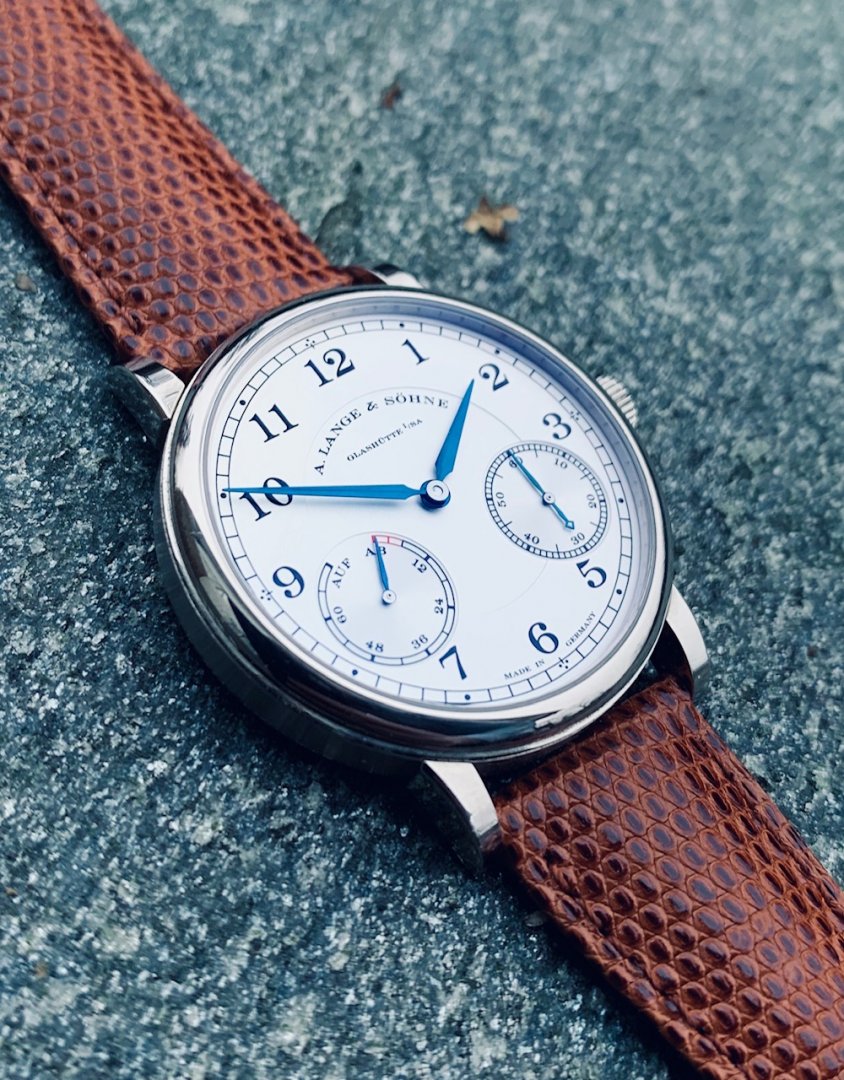
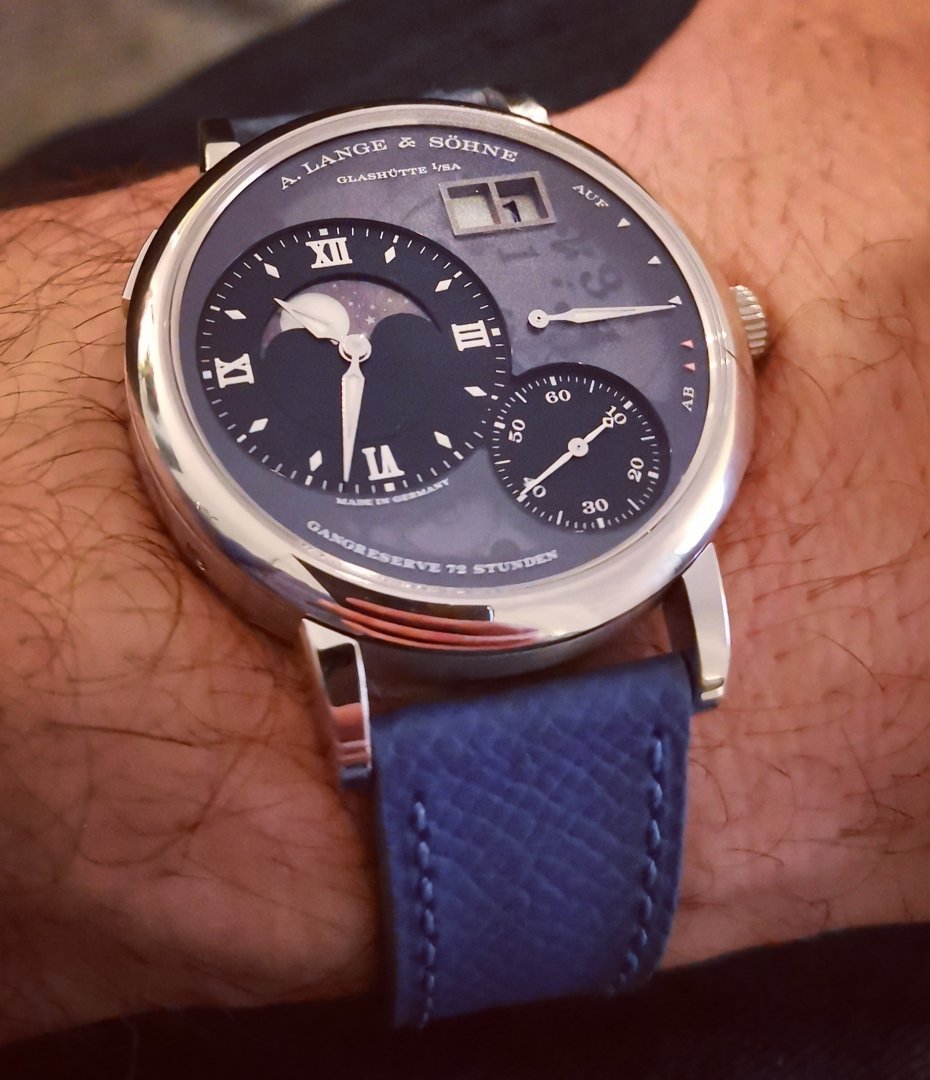
Etter en helt nydelig session med ALS’er på Bjerke i går merker jeg at denne definitivt fortjener mer armtid.


ALS fortjener mer oppmerksomhet. Disse to fikk min i går


1815 and SAXONIA OUTSIZE DATE |
 |
| 1815 and SAXONIA OUTSIZE DATE: Perfection in each detail |
 |
| Dear Mr Edzilla, Ferdinand Adolph Lange was born in Dresden on 18 February 1815, exactly 205 years ago. He learned the craft of watchmaking from the grand masters of his era, built the stage clock in Dresden’s Semper Opera House together with celebrated court clockmaker Gutkaes, and spent several years in Paris to hone his precision watchmaking skills. Aged 30, he then established his manufactory in Glashütte, a small township south of Dresden, thus laying the cornerstone for the production of superior mechanical timepieces in this region.  Within just a few years, his first small workshop with 15 apprentices evolved into a flourishing business with over 100 employees. Thanks to his initiative, Glashütte was transformed from an impoverished town into a centre of precision watchmaking in Germany. In recognition of his merits for horological craftsmanship, we named our model 1815 after his birth year. Quest for perfection: We still pursue these procedures today Ferdinand Adolph Lange’s passion for artisanship and his dedication to precision and perfection are values that we continue to share to this very day. To enhance the appeal of his pocket watches, he used various techniques that our manufactory still practises today. This includes elaborate manual engraving, for example. It was and is still used to decorate the balance cock. The motif is a time-honoured tradition upheld by our engravers: Floral patterns grace the balance cock, framed by a fine line.  Instead of several smaller bridges, our watches feature a three-quarter plate made of German silver. It was developed by Ferdinand Adolph Lange and patented in 1864. The extra assembly effort resulting from its shape and the beautiful but sensitive material are the principal reasons why every Lange watch is assembled twice. Masterpieces of watchmaking artisanship Venerable traditions not only inspired the design of the 1815 family with its Arabic numerals and classic minute scale reminiscent of pocket watches but also influenced the style of other Lange timepieces. For instance, the date display of the SAXONIA OUTSIZE DATE has its origins in the five-minute clock of the Dresden Semper Opera House to which Ferdinand Adolph Lange contributed his expertise. Elegant design and technical finesse characterise the SAXONIA OUTSIZE DATE. Its name refers to the state of Saxony, A. Lange & Söhne’s homeland. |
 |
Since our reincorporation in 1990, we have been abiding by the legacy of the Saxon watchmaking pioneer and pursuing his quest for perfection down to the last detail. To allow you to see and admire the artistry, each of our watches has a sapphire-crystal caseback. |
 |
Discover the 1815 and the SAXONIA OUTSIZE DATE Make an appointment with one of our boutiques to personally acquaint yourself with the 1815, the SAXONIA OUTSIZE DATE, and other models of our current collection. MAKE AN APPOINTMENT |
|


Fikk også den eposten nettopp, og da jeg venter på en av de som er avbildet kjente jeg at hjertet med ett banket litt fortere...
Dette har sikkert vært oppe i forumet, eller kanskje til og med i denne tråden, men våger meg:
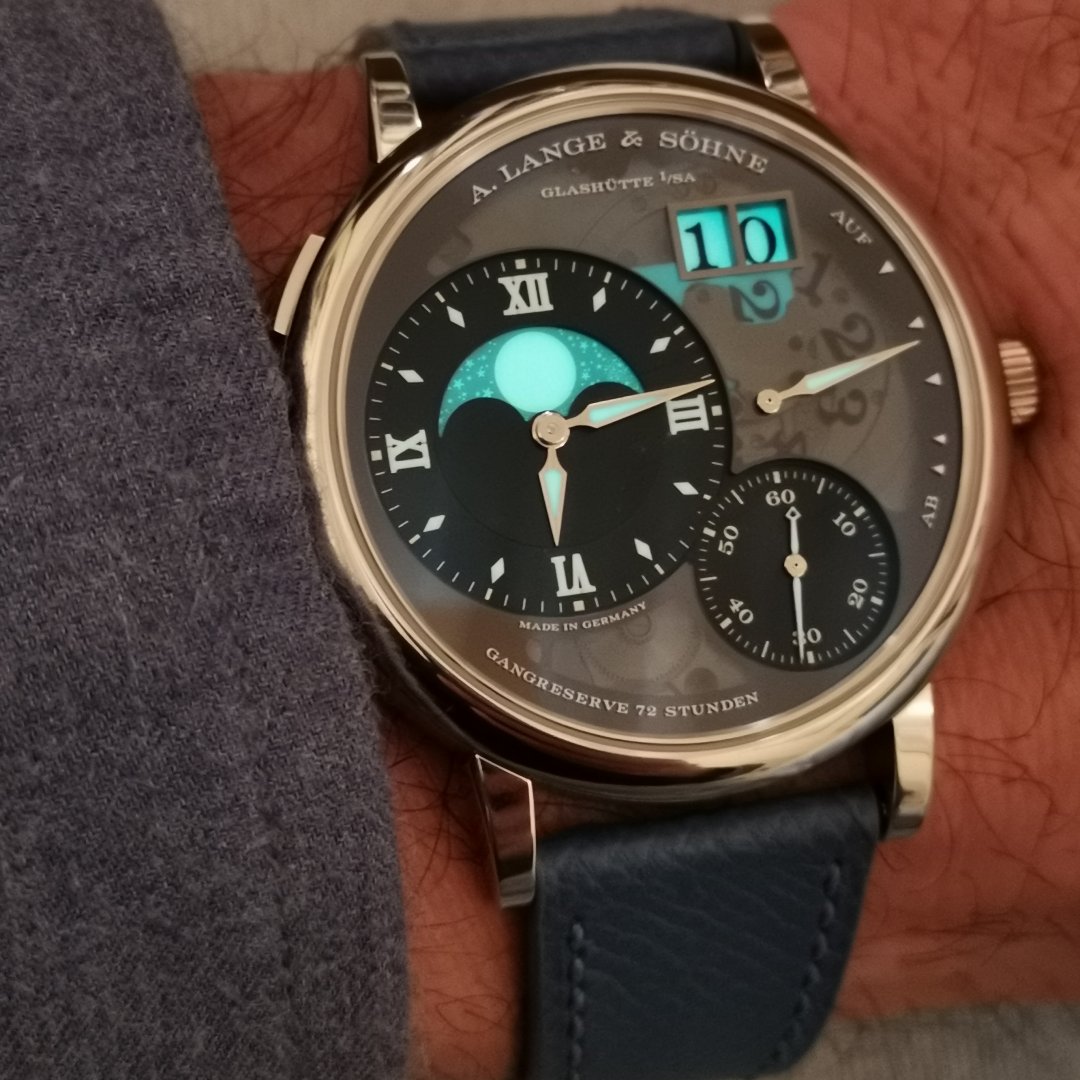
Hva syns dere om ALS sitt valg om å bruke blank istedenfor null på digital dato? Hvis man ser bort i fra rasjonalet bak og kun tenker estetikk. Har stort sett bare bilder å forholde meg til her, men opplever det som en liten «torn i øyet». Forsterket av at de to datosifrene er i atskilte åpninger.
Hva syns dere om ALS sitt valg om å bruke blank istedenfor null på digital dato? Hvis man ser bort i fra rasjonalet bak og kun tenker estetikk. Har stort sett bare bilder å forholde meg til her, men opplever det som en liten «torn i øyet». Forsterket av at de to datosifrene er i atskilte åpninger.
Hva syns dere om ALS sitt valg om å bruke blank istedenfor null på digital dato? Hvis man ser bort i fra rasjonalet bak og kun tenker estetikk. Har stort sett bare bilder å forholde meg til her, men opplever det som en liten «torn i øyet». Forsterket av at de to datosifrene er i atskilte åpninger.
-Personlig foretrekker jeg Langes løsning foran alternativet - i mitt hode er ledende null i dato for datamaskiner og LCD-skjermer. Smak og behag, dog.
- Medlem
- 20. okt. 2014
- Innlegg
- 1.126
Del: